
Basement Water Damage Cleanup in Bradenton, FL
Basement water damage can affect flooring, walls, stored belongings, and other parts of a property when water enters through leaks, cracks, or other openings. Standing water and persistent moisture can also damage building materials if the affected areas are not addressed promptly. Bradenton Restoration Specialist helps property owners understand their basement water damage concerns and determine appropriate cleanup options.
Whether the problem involves a plumbing leak, water seepage, or indoor flooding, the first steps are to identify the likely source, assess the affected areas, and determine what needs attention. The right approach depends on where the water came from, how much has accumulated, and which materials have been affected.
Signs and Causes of Basement Water Damage
Basement water damage is not always limited to visible puddles. Moisture can collect along walls, beneath flooring, or around stored belongings. Recognizing the signs early can help property owners address the problem before additional materials are affected.
Standing Water, Damp Walls, and Water-Damaged Flooring
Visible standing water is an obvious sign of basement flooding, but other warning signs may be less noticeable. Damp patches on walls, peeling paint, swollen baseboards, wet carpet padding, and persistent musty odors can indicate a moisture problem.
Water can also affect drywall, insulation, wood framing, and items stored directly on the floor. Even when the visible surface appears dry, moisture may remain underneath flooring or inside porous materials.
If you notice these conditions, avoid assuming the area is completely dry based on appearance alone. A closer assessment can help identify the extent of the damage and determine which materials may need cleanup, drying, or replacement.
Basement Leaks, Foundation Seepage, and Rainwater Intrusion
Basement water intrusion can have several possible causes. Plumbing leaks, damaged pipes, foundation cracks, drainage problems, and water entering through wall or floor openings may allow moisture to collect indoors. Heavy rainfall can also contribute to water intrusion when drainage around a property is inadequate.
The source of the water matters because cleaning up the visible water alone may not resolve the underlying problem. For example, a recurring leak may require plumbing repairs, while water entering through a foundation opening may require evaluation by an appropriate foundation or drainage professional.
Identifying the likely entry point helps determine the next steps and may reduce the chance of the same problem recurring.
Our Basement Water Damage Cleanup Process
Every basement water damage situation is different. The cleanup approach depends on the source of the water, the affected materials, the amount of water present, and whether moisture has spread into concealed areas.
Inspecting the Basement and Assessing Water Damage
An initial assessment focuses on the visible water, affected surfaces, and potential areas of hidden moisture. This may include basement floors, walls, baseboards, carpet and padding, stored belongings, and other materials near the affected area.
The assessment also considers the possible source of the water and whether the affected materials may require additional inspection. Water that has reached drywall, insulation, or wood components may need closer evaluation than water confined to a nonporous surface.
If the water may contain sewage or other contaminants, the cleanup requirements can differ from those for a clean-water plumbing leak. Avoid direct contact with potentially contaminated water and keep people away from unsafe areas.
Planning Basement Water Removal and Cleanup
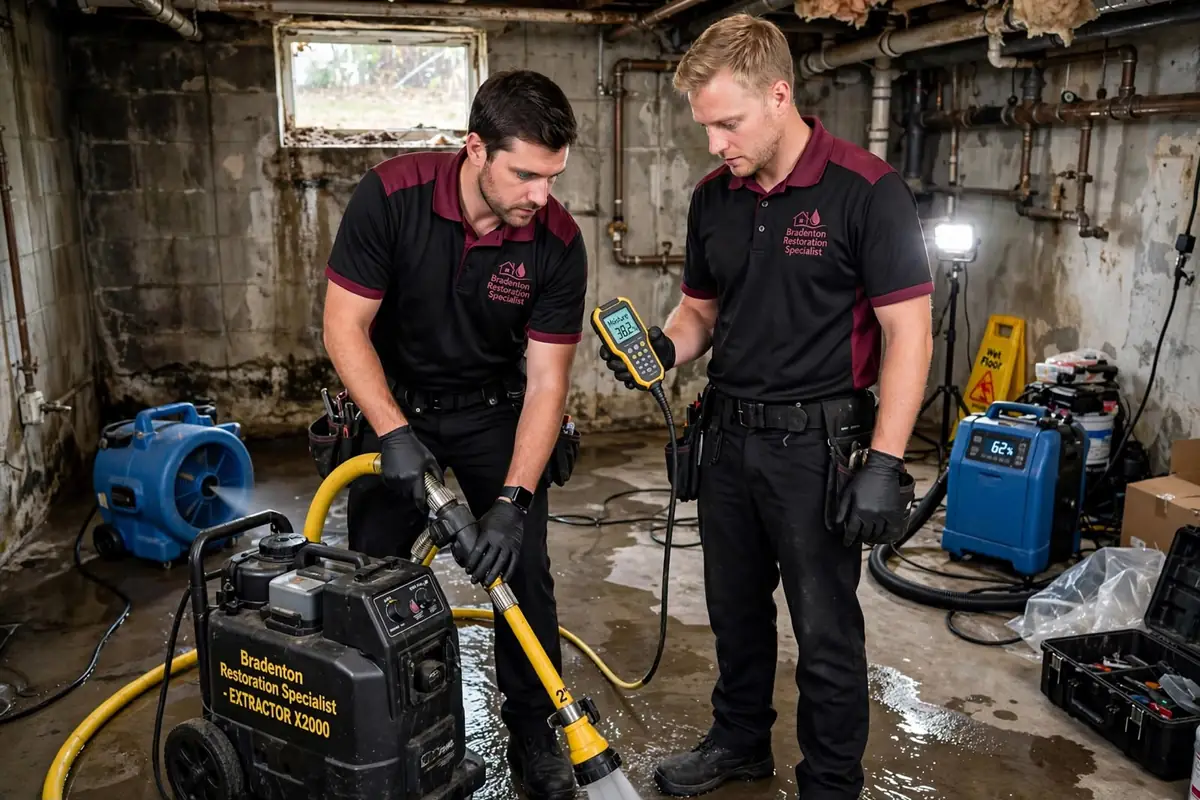
Once the affected areas have been assessed, the next step is to determine an appropriate cleanup approach. Where standing water is present, removal may be necessary before the affected surfaces and materials can be evaluated further.
The amount of water, access to the affected area, and type of flooring or wall materials can influence how the work is carried out. Water removal is only one part of the process; materials may still need moisture assessment and additional drying after visible water is gone.
For more information about the removal of standing water from affected areas, visit our Water Extraction & Removal service page.
Protecting Basement Walls, Floors, and Belongings
Water can affect more than the surface where it first appears. Depending on the amount of water and how long materials remain wet, damage may extend to flooring layers, wall cavities, insulation, and personal belongings.
Evaluating Damage to Flooring, Drywall, and Stored Items
Carpet and padding may absorb water, while laminate flooring, wood materials, and baseboards may swell, warp, or deteriorate. Drywall and insulation can also be affected if water reaches the wall assembly. Cardboard boxes, fabric items, furniture, and belongings stored on the floor may require separate evaluation.
Whether a material can be retained depends on factors such as its composition, the type of water involved, the extent of contamination, and how long it has remained wet. Some items may be suitable for cleaning and drying, while others may need to be discarded or replaced.
Where it is safe to do so, move unaffected belongings away from the wet area. Do not enter standing water if electrical outlets, appliances, wiring, or other electrical hazards may be present.
Addressing Residual Moisture and Mold Concerns
Removing visible water does not necessarily mean the basement is dry. Moisture can remain beneath flooring, behind baseboards, inside drywall, or within other porous building materials. If these areas stay damp, the risk of mold growth may increase.
Moisture assessment and appropriate drying help determine whether water remains in affected materials. The drying requirements depend on the construction, materials, and extent of the water intrusion rather than a fixed timetable.
For more information about drying water-damaged building materials, see our Structural Drying & Dehumidification service page. If mold is already present or suspected, the affected area may need a separate evaluation to determine the appropriate remediation steps.
Basement Water Damage Services in Bradenton, FL
Basement water damage requires an approach suited to the property's layout, the source of the water, and the materials involved. Bradenton Restoration Specialist can answer questions from Bradenton property owners about water damage cleanup options.
Cleanup for Basement Leaks and Indoor Flooding
Water damage may follow a leaking pipe, plumbing fixture failure, water heater leak, drainage issue, or rain-related water intrusion. Each situation requires consideration of both the visible damage and the conditions that allowed the water to enter.
If water is still entering the property, address the source only when it is safe to do so. Plumbing or foundation issues may require a qualified specialist to repair the underlying problem. Water damage cleanup can then focus on the affected indoor areas and the materials that need attention.
Because basement configurations vary, the appropriate service depends on the actual property and the type of damage present.
Local Basement Water Damage Help in Bradenton
If you have discovered water in a basement or below-grade space at your Bradenton property, describe where the water appeared, when you noticed it, and whether the source is still active. These details can help establish what needs to be assessed.
Bradenton Restoration Specialist can discuss your concerns and help you understand the next steps for addressing the affected area. The appropriate response will depend on the water source, the extent of the damage, and the services required for the property.
Contact Bradenton Restoration Specialist for Basement Water Damage Cleanup
Water intrusion can affect flooring, walls, stored belongings, and concealed building materials. Addressing the problem begins with understanding where the water came from and identifying the areas that may require cleanup or further assessment.
Discuss the Source and Extent of the Water Damage
When contacting us, share any details you know about the problem, including:
- Where the water is collecting or entering.
- Whether the issue followed a leak, plumbing failure, or rainfall.
- Which floors, walls, or belongings appear wet.
- Whether standing water remains or the problem has happened before.
If you suspect sewage contamination or an electrical hazard, keep clear of the affected area until it can be assessed safely.
Arrange an Assessment for Your Water-Damaged Basement
For questions about basement water damage cleanup in Bradenton, contact Bradenton Restoration Specialist to discuss the conditions at your property and the available next steps.
- Phone Number:
- Call Now +1 (941) 541-0203
- Email:
- contact@bradentonwaterdamagerestoration.us
- Address:
- 1806 29th St W, Bradenton, FL 34205
- Hours:
- Open 24/7 for emergency calls
Explain what happened and which areas are affected so the situation can be discussed more clearly.