
Mold Remediation in Bradenton, FL
Mold can develop when moisture remains on or inside building materials, particularly after a roof leak, plumbing problem, flooding, or prolonged dampness. Visible spots, musty odors, and recurring moisture may indicate a problem that needs further assessment. Bradenton Restoration Specialist provides mold remediation assistance for properties in Bradenton, FL, with the appropriate approach depending on the extent of the growth, the materials affected, and the underlying moisture conditions.
Effective mold remediation involves more than cleaning visible spots. The affected areas need to be evaluated, the moisture source addressed, and suitable remediation steps identified for the property's condition. Taking these factors into account helps property owners understand what work may be needed and how to reduce the conditions that contribute to recurring mold growth.
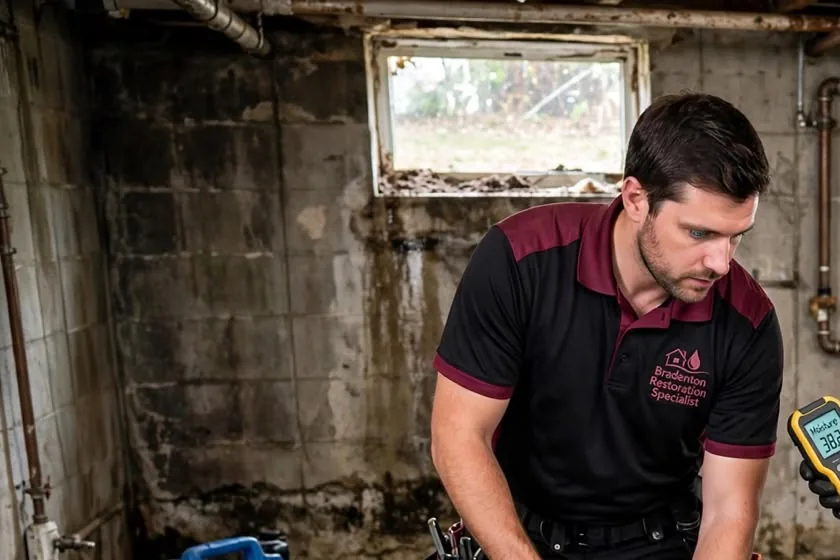
Common Causes and Signs of Indoor Mold Growth
Mold Growth After Water Leaks and Moisture Problems
Mold can grow when moisture persists in areas that provide suitable conditions for its development. Roof leaks, burst pipes, leaking water heaters, plumbing failures, and indoor flooding can introduce moisture into building materials. Condensation, elevated indoor humidity, and inadequate ventilation may also contribute to damp conditions.
Some moisture problems are easy to identify, such as water collecting on a floor after a leak. Others may be less obvious. Water can enter wall cavities, soak insulation, collect beneath flooring, or remain inside drywall after the visible water has been removed. If affected materials do not dry adequately, the continued dampness can support mold growth.
Properties in Bradenton, Florida, can experience humid conditions, making it important to address persistent moisture rather than relying only on surface cleaning. However, humidity alone does not confirm a mold problem; the actual conditions and affected materials need to be assessed.
Visible Mold, Musty Odors, and Affected Building Materials
Indoor mold may appear as spots or patches with different colors and textures. It can develop on drywall, ceiling materials, baseboards, wood, flooring, and other surfaces when moisture conditions allow it to grow. A musty odor may also indicate a moisture-related problem, although odors alone cannot confirm the presence or type of mold.
Signs that may warrant further assessment include:
- Visible spots or patches on walls and ceilings
- Mold-like growth on baseboards or around windows
- Musty odors in damp rooms or enclosed spaces
- Recurring discoloration after surface cleaning
- Damp drywall, flooring, or other building materials
- Signs of previous water intrusion or persistent leaks
- Moisture problems in bathrooms, laundry areas, attics, or utility rooms
Mold can sometimes develop in areas that are not immediately visible, including behind wall finishes or beneath certain flooring materials. If visible growth keeps returning, addressing the underlying moisture conditions is important. Not every stain or musty odor is caused by mold, so further evaluation may be needed to understand the problem.
Assessing Mold Problems in Homes and Commercial Properties
Identifying Mold-Affected Walls, Ceilings, and Flooring
The materials affected by mold can influence the appropriate remediation approach. Drywall, ceiling materials, insulation, carpet padding, wood framing, baseboards, and cabinets may require different forms of assessment and treatment. Some materials may be suitable for cleaning, while others may be too damaged or porous to restore appropriately.
The location of the growth also matters. Mold on an accessible hard surface may require a different response from suspected growth inside a wall cavity or above a ceiling. Areas affected by earlier plumbing leaks, roof leaks, or flooding may need additional attention if moisture remains concealed.
Bradenton Restoration Specialist focuses on understanding the affected areas and the conditions contributing to the problem. The extent of visible growth, the type of material, and the possibility of hidden moisture all help determine the next steps.
Evaluating Moisture Sources and Conditions That Support Mold
Addressing the moisture source is an important part of managing a mold problem. A leaking pipe can keep a wall damp, while a roof leak may repeatedly wet ceiling materials and attic insulation. Condensation and elevated indoor humidity can also contribute to moisture accumulation in certain areas.
Depending on the situation, the source may need to be addressed by a qualified plumber, roofing professional, or other appropriate specialist. Mold remediation should not be treated as a substitute for repairing an ongoing leak or correcting a persistent moisture problem.
An assessment may consider visible dampness, previous water damage, ventilation concerns, and accessible areas where moisture may remain. Identifying these contributing conditions helps inform the remediation plan and can reduce the likelihood of the same moisture-related problem continuing.
Our Mold Remediation Process
Evaluating Affected Areas and Planning Remediation
Mold remediation begins with understanding the location and extent of the suspected growth, the materials involved, and the conditions that may have contributed to it. The appropriate scope of work depends on whether the growth is limited to an accessible surface or may involve porous materials and concealed areas.
The assessment helps determine which materials may be cleaned, which may need further evaluation, and whether additional moisture investigation is appropriate. Mold inspection, laboratory testing, and indoor air-quality testing are separate services and should be arranged when needed through a qualified provider offering those services.
A suitable remediation plan should reflect the actual conditions of the property rather than assuming every situation requires the same procedures. Where the affected area is extensive, concealed, or associated with significant water damage, an appropriately qualified remediation professional may be needed.
Addressing Mold Growth and Affected Materials
The appropriate treatment depends on the material, the extent of the growth, and the condition of the affected area. Some nonporous surfaces may be suitable for appropriate cleaning, while porous materials such as certain drywall, insulation, or carpet padding may require removal if they cannot be adequately cleaned or restored.
Cleanup should be carried out with appropriate precautions to avoid unnecessary disturbance and spread of mold-contaminated material. Simply painting over visible growth or cleaning the surface without addressing persistent moisture may not resolve the underlying problem.
After remediation, the affected area should be evaluated according to the scope of work and the condition of the materials. Additional cleaning, repairs, or drying may be needed before the area is ready for normal use. The appropriate steps depend on the circumstances, and no single treatment can guarantee that mold will never return.
Preventing Recurring Mold Problems Through Moisture Management
Addressing Leaks, Damp Materials, and Indoor Humidity
Reducing the conditions that support mold growth starts with managing moisture. Plumbing leaks should be repaired, roof leaks should be addressed, and areas affected by water intrusion should be assessed for residual dampness. Where condensation or high indoor humidity contributes to the problem, appropriate ventilation and humidity management may also be necessary.
Property owners should pay attention to recurring dampness around windows, under sinks, near water heaters, and on ceilings or walls that have previously been affected by leaks. Persistent moisture should not be ignored simply because visible water has disappeared.
If the mold concern followed a specific water damage incident, the related source may require separate attention. Our Roof Leak Water Damage, Burst Pipe Water Damage, and Water Heater Leak Cleanup service pages provide further information about water damage associated with those situations.
Drying Water-Affected Materials and Monitoring Moisture
Building materials can retain moisture after standing water has been removed or a leak has been repaired. Drywall, insulation, wood framing, and flooring may require further assessment to determine whether drying is necessary. Moisture monitoring can also help establish whether affected materials are continuing to dry.
Structural drying and dehumidification address moisture in water-affected materials and the surrounding indoor environment. These steps can support moisture management, but they do not replace appropriate mold remediation when mold growth is already present.
For additional information about managing residual moisture after water damage, visit our Structural Drying & Dehumidification service page. Addressing both the existing mold problem and the conditions that support its growth is an important part of a considered remediation approach.
Mold Remediation Services in Bradenton, FL
Residential and Commercial Mold Remediation
Mold-related concerns can affect homes, apartments, offices, retail spaces, and other buildings. In residential properties, growth may appear in bathrooms, utility rooms, ceilings, closets, or areas previously affected by leaks. Commercial properties may experience moisture problems in offices, storage areas, restrooms, and other interior spaces.
The appropriate remediation approach depends on the location, the extent of the growth, the type of materials involved, and the source of moisture. Property owners and managers should consider both the affected area and any continuing water intrusion when deciding what needs to be addressed.
Bradenton Restoration Specialist serves the local Bradenton, Florida, market for water damage-related restoration needs. If you have concerns about mold growth or persistent moisture, describing the location and history of the problem can help clarify which assessment or remediation steps may be appropriate.
Contact Bradenton Restoration Specialist About Mold Remediation
If you have noticed visible mold, recurring discoloration, musty odors, or persistent dampness in your property, consider having the affected area evaluated. Avoid disturbing suspected mold growth unnecessarily, particularly when it covers a large area or involves damaged building materials.
Contact Bradenton Restoration Specialist to discuss your mold-related concerns in Bradenton, FL. When reaching out, explain where the growth appears, whether the area has experienced a leak or flooding, and whether the moisture problem is ongoing.
- Phone Number:
- Call Now +1 (941) 541-0203
- Email:
- contact@bradentonwaterdamagerestoration.us
- Address:
- 1806 29th St W, Bradenton, FL 34205
- Hours:
- Open 24/7 for emergency calls
Contact us to discuss the moisture-related problem affecting your property and determine the appropriate next steps.