
Commercial Water Damage Restoration in Bradenton, FL
Water damage can disrupt business operations, affect commercial building materials, and damage equipment, inventory, and furnishings. A plumbing leak, burst pipe, roof leak, or overflowing fixture can allow water to spread through offices, retail spaces, and other commercial properties. Bradenton Restoration Specialist provides water damage cleanup assistance for commercial properties in Bradenton, FL, with the appropriate next steps determined by the source and extent of the damage.
Commercial water damage restoration involves more than removing visible water. It may also require assessing affected materials, identifying areas where moisture remains, and planning appropriate cleanup and drying. Addressing these concerns can help property owners and managers make informed decisions about restoring affected spaces.
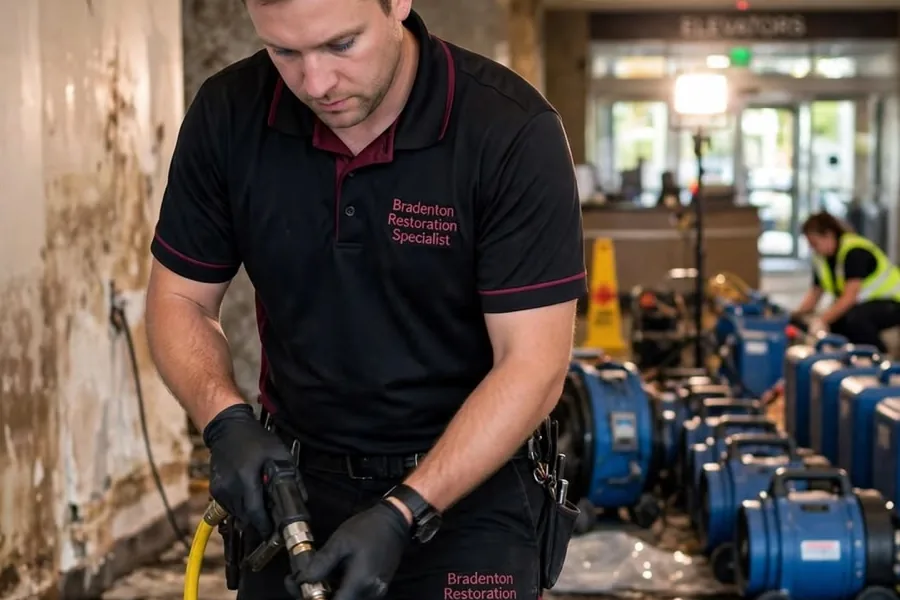
Common Causes and Signs of Commercial Water Damage
Plumbing Leaks, Burst Pipes, and Water Intrusion
Water damage in commercial buildings can develop from several sources. A burst pipe may release water into an office or retail space, while a leaking water heater, plumbing connection, or overflowing fixture can affect nearby floors and walls. Roof leaks and stormwater intrusion may also allow water to enter through ceilings and exterior building areas.
Some water damage develops gradually. A small plumbing leak may continue unnoticed behind a cabinet or wall, while a damaged pipe can cause more immediate flooding. HVAC condensate leaks and other building system problems may also introduce moisture into areas that are not regularly inspected.
Identifying the source is an important part of determining the appropriate response. Depending on the situation, a qualified plumber, roofing professional, or other specialist may need to repair the underlying problem while water damage cleanup addresses the affected interior.
Water Damage to Offices, Retail Spaces, and Business Assets
Commercial water damage can affect the materials and equipment a business depends on each day. Water may soak commercial carpeting, damage ceiling tiles, stain drywall, affect flooring, or spread into adjoining rooms. Furniture, computers, stock, documents, and other business assets may also be exposed.
Common signs of commercial water damage include:
- Standing water on office or retail floors
- Damp carpet and carpet padding
- Water stains on ceilings and walls
- Swollen baseboards or damaged flooring
- Wet ceiling tiles or drywall
- Moisture around cabinets and storage areas
- Water-damaged furniture, inventory, or equipment
- Musty odors in areas that remain damp
The effects may extend beyond visible property damage. Wet floors, damaged electrical equipment, and restricted access to affected rooms can create safety concerns and interrupt normal business activities. A proper assessment helps establish which areas need attention and what steps may be necessary before they can be used again.
What to Do When Water Damage Affects Your Business
Protect Employees, Customers, and Commercial Property
When water enters a commercial property, protecting people should come before cleanup. Keep employees, customers, and visitors away from standing water, unstable ceiling materials, and other potentially hazardous areas. Water near electrical outlets, wiring, machinery, or electronic equipment may create a serious safety risk.
Do not touch wet electrical equipment or attempt to operate machinery in an affected area. If an electrical hazard is suspected, keep people clear and contact a qualified professional. For significant flooding or an immediate threat to safety, seek appropriate emergency assistance.
If the source of the water can be safely identified, contact the relevant professional to address it. Plumbing failures may require a plumber, while roof-related intrusion may require a qualified roofing professional. Resolving the source helps prevent additional water from entering while the damage is assessed.
Document Damage and Limit Further Disruption
Once the affected area is safe to approach, property owners and managers can take practical steps to support the cleanup process. Photograph visible damage, note which rooms are affected, and record any equipment, inventory, or furnishings that have been exposed to water.
When it is safe, move unaffected items away from wet areas and prevent unnecessary access to damaged spaces. Avoid moving heavy or water-damaged equipment without considering its weight, electrical condition, and potential safety risks.
It may also help to inform relevant staff about restricted areas and preserve records of the incident for property management or insurance purposes. Documenting the damage does not guarantee insurance coverage, but it can help maintain an accurate record of what occurred.
For businesses in Bradenton, FL, arranging a water damage assessment can help clarify the extent of the damage and determine which cleanup and restoration steps should be considered.
Our Commercial Water Damage Restoration Process
Assessing Water Damage Across Commercial Spaces
Commercial water damage restoration begins with evaluating the affected areas and understanding how water entered the building. Depending on the property, the assessment may include offices, retail floors, corridors, storage areas, ceilings, walls, and adjoining rooms.
The condition of building materials and business assets also matters. Commercial carpeting may hold moisture beneath its surface, while ceiling tiles and drywall can absorb water. Moisture may also extend beneath flooring or into wall cavities, making it important to consider areas beyond the visible water line.
The assessment helps establish the extent of the damage and the likely cleanup requirements. The needs of a small office with a localized leak may differ significantly from those of a retail space with standing water across several rooms.
Planning Water Removal and Initial Cleanup
The cleanup approach depends on the amount of water, its source, the materials affected, and the layout of the commercial property. When standing water is present, water extraction may be needed before affected flooring and other materials can be evaluated further.
After accessible water is removed, additional assessment may be necessary to determine whether carpets, flooring, drywall, ceiling materials, or other items need further attention. Some materials may be suitable for drying, while others may require cleaning, repair, or replacement based on their condition.
Removing visible water does not necessarily mean that all moisture has been eliminated. Water can remain beneath flooring or within porous building materials, so additional inspection may be appropriate.
For more information about standing water removal, visit our Water Extraction & Removal service page. If a sudden leak or indoor flooding requires urgent attention, our Emergency Water Damage Restoration service page provides further information about responding to water damage.
Commercial Drying and Protection of Building Materials
Evaluating Damaged Flooring, Ceilings, Walls, and Equipment
Different commercial materials respond differently to water exposure. Carpet and padding may retain moisture, while vinyl and tile flooring can conceal water along edges or beneath certain installations. Drywall, ceiling tiles, insulation, and wood framing may also be affected depending on the location and duration of the leak.
Business equipment and inventory need separate consideration. Computers, electrical devices, paper records, stored products, and furnishings may require assessment before they can be safely used, cleaned, or returned to service. The appropriate action depends on the type of item and the extent of its exposure.
Not every water-damaged material requires replacement. Where suitable, materials may be dried and evaluated, while items that are severely damaged or cannot be adequately restored may need further attention. Decisions should be based on their actual condition rather than a one-size-fits-all approach.
Managing Residual Moisture and Restoration Planning
After standing water has been removed, moisture may remain in flooring, drywall, insulation, or other building materials. If these areas remain damp, the continued moisture can contribute to material deterioration and create conditions that support mold growth.
Depending on the assessment, next steps may include moisture inspection, structural drying, dehumidification, and monitoring the condition of affected materials. The goal is to determine whether moisture remains and what additional work is appropriate before restoration proceeds.
Commercial properties may require coordination between property owners, managers, tenants, and relevant trades to plan work around affected areas. However, the timeline for restoring access depends on the damage, safety considerations, and the work required; a specific reopening time cannot be guaranteed without assessing the property.
Our Structural Drying & Dehumidification service page provides more information about managing residual moisture in water-affected building materials.
Commercial Water Damage Help for Bradenton Businesses
Water Damage Cleanup for Local Businesses and Property Managers
Water damage can affect offices, retail stores, commercial units, and other business premises throughout Bradenton, Florida. The impact depends on the source of the water, the building's layout, and the materials or assets exposed.
For a property manager, the priority may be assessing damage across multiple rooms or coordinating work in an occupied building. A business owner may need to understand which inventory, furnishings, or work areas have been affected. In either case, identifying the damaged areas and determining appropriate cleanup steps are important parts of the restoration process.
Bradenton Restoration Specialist focuses on water damage cleanup needs for commercial properties in Bradenton. The appropriate response depends on the circumstances of the incident and the actual condition of the property, rather than assuming every commercial water damage situation requires the same services.
Contact Bradenton Restoration Specialist for Commercial Water Damage
If water damage has affected your commercial property, addressing the issue promptly can help you understand the extent of the damage and the steps needed to move forward.
Contact Bradenton Restoration Specialist to discuss commercial water damage restoration in Bradenton, FL. When reaching out, describe the source of the water if known, the affected rooms or business areas, and whether standing water or visible material damage is present.
- Phone Number:
- Call Now +1 (941) 541-0203
- Email:
- contact@bradentonwaterdamagerestoration.us
- Address:
- 1806 29th St W, Bradenton, FL 34205
- Hours:
- Open 24/7 for emergency calls
Contact us to discuss the water damage affecting your business property and determine the appropriate next steps for cleanup and restoration.