
Burst Pipe Water Damage Cleanup in Bradenton, FL
A burst water pipe can release a large amount of water into a property in a short time, damaging walls, ceilings, flooring, cabinets, and personal belongings. Even after the water supply is stopped, moisture may remain inside drywall, beneath flooring, or within other building materials. Prompt attention helps identify the affected areas and determine the appropriate cleanup steps.
Bradenton Restoration Specialist helps property owners address water damage concerns caused by burst pipes and plumbing failures. Whether a pipe breaks beneath a sink, inside a wall, or above a ceiling, the cleanup approach depends on the amount of water released, how long it flowed, and which materials were affected.
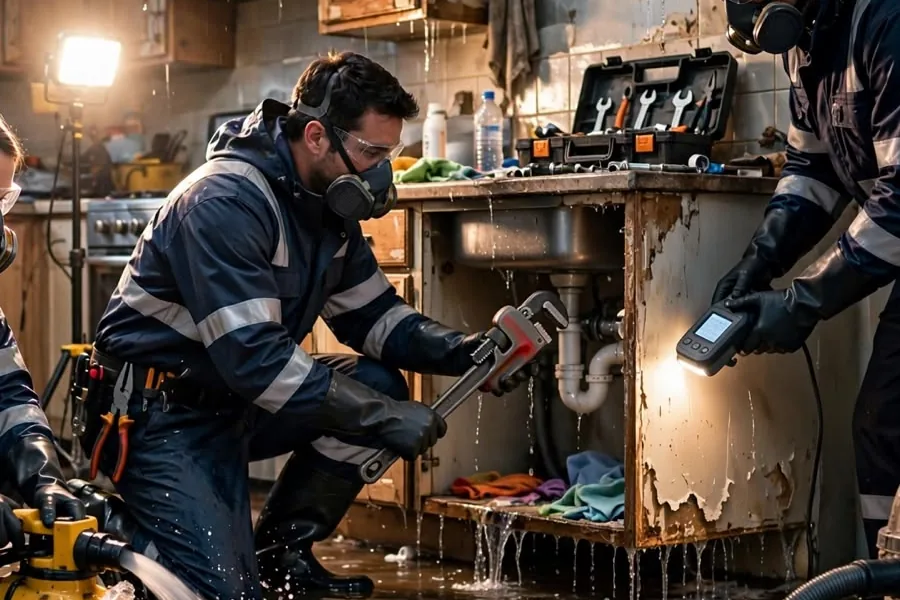
Signs and Causes of Burst Pipe Water Damage
Pipe-related water damage can range from a small wet area to extensive indoor flooding. Understanding how the pipe failed and recognizing the signs of water intrusion can help property owners determine what needs attention.
Burst Pipes, Broken Connections, and Plumbing Leaks
Water damage may occur when a plumbing pipe cracks, splits, ruptures, or separates at a connection. Damaged supply lines, corroded pipes, failed joints, and other plumbing problems can also allow water to escape into indoor spaces.
Leaks may develop beneath kitchen or bathroom sinks, behind appliances, inside wall cavities, or around plumbing connections. A damaged pipe hidden behind drywall can continue releasing water before the problem becomes visible. In some cases, the first indication may be a damp patch, peeling paint, or an unexpected increase in water usage.
The underlying plumbing problem needs to be addressed to prevent further water from entering the property. A qualified plumber can identify the cause of the failure and carry out the necessary repairs.
Water Damage to Ceilings, Walls, and Flooring
Water from a burst pipe can spread beyond the immediate leak location. It may stain ceilings, soak drywall, swell baseboards, warp wood flooring, or collect beneath carpet and padding. Cabinets, furniture, stored belongings, and other household items may also be affected.
Water can travel through gaps, joints, and concealed spaces before appearing on a visible surface. As a result, the area that looks wet may not represent the full extent of the damage.
Signs such as bubbling paint, soft drywall, damp flooring, discoloration, and persistent moisture warrant further assessment. Identifying affected materials early helps determine whether cleanup, drying, or replacement may be needed.
What to Do When a Water Pipe Bursts
Taking sensible precautions after a pipe failure can help reduce additional damage and protect people inside the property. Safety should always come before attempting to save belongings or clean up water.
Stop the Water Supply and Address Immediate Safety Risks
If it is safe to do so, shut off the property's main water supply or the relevant fixture's shutoff valve to stop additional water from entering the affected area. If you cannot locate or operate the valve safely, contact a qualified plumber.
Keep away from standing water near electrical outlets, appliances, wiring, or electrical panels. Do not enter a flooded area if an electrical hazard may be present. Arrange for the appropriate professional to address the hazard before entering.
If the pipe failure affects a ceiling, avoid standing beneath bulging or sagging materials, as water accumulation can weaken the ceiling. Contact a plumber to repair the pipe and arrange water damage cleanup for the affected property.
Limit Further Damage While Arranging Cleanup
Once the situation is safe, keep people away from affected areas and move unaffected belongings to a dry location if doing so does not expose you to electrical or structural hazards. Avoid walking unnecessarily through wet rooms, as this can spread water to additional surfaces.
You can photograph visible damage for your records when it is safe to do so. If you plan to contact your insurer, keep relevant documentation and receipts, but do not delay necessary safety measures or urgent repairs while gathering information.
Do not assume that removing visible water will resolve the entire problem. Moisture can remain beneath flooring, behind baseboards, and inside wall cavities, so affected materials may need further assessment.
Our Burst Pipe Water Damage Cleanup Process
The appropriate cleanup process depends on the pipe's location, the volume of water released, and the condition of the affected building materials. Assessment helps establish the extent of the damage and determine the next steps.
Assessing Pipe-Related Water Damage and Hidden Moisture
An assessment focuses on the visible water damage and the areas that may have been exposed to moisture. These may include ceilings, drywall, baseboards, flooring, carpet padding, cabinets, and other materials near the failed pipe.
Some damage is not immediately visible. Water may travel behind walls or beneath flooring, affecting materials that appear dry on the surface. A suitable moisture assessment can help identify areas that require closer attention.
The source of the leak and the duration of exposure are also important. Water from a clean plumbing supply may present different cleanup considerations from water that has contacted contaminated materials or other sources of wastewater.
Planning Water Removal and Property Restoration
When standing water is present, removal may be necessary before affected surfaces and materials can be evaluated further. The appropriate method depends on the amount of water, access to the affected areas, and the surfaces involved.
After visible water has been removed, additional work may be required to address moisture remaining in flooring, walls, insulation, and other building materials. Some items may be suitable for cleaning and drying, while materials that are severely damaged may need replacement.
For more information about standing water removal, visit our Water Extraction & Removal service page. The specific work required for a burst pipe depends on the conditions at the property and should not be based on a fixed restoration timeline.
Addressing Hidden Moisture and Damaged Building Materials
Water released from a burst pipe can affect both visible surfaces and concealed parts of a building. Understanding how moisture interacts with different materials is important when determining whether additional drying or repairs are necessary.
Evaluating Wet Drywall, Insulation, Flooring, and Subfloors
Drywall can absorb water, soften, or lose its structural integrity. Insulation inside wall cavities may also become wet, while wood framing and subfloors can retain moisture. Carpet and padding may hold water even after the visible surface appears relatively dry.
The appropriate response depends on the material type, the amount of water absorbed, the duration of exposure, and the extent of any contamination. Some materials may be dried and retained, while others may require removal and replacement.
A proper evaluation helps identify the areas that need attention instead of relying only on visible stains or surface dryness.
Reducing the Risk of Continued Moisture Damage
Residual moisture can contribute to material deterioration and create conditions favorable to mold growth if affected areas remain damp. Addressing the moisture problem involves determining which materials are wet and establishing whether additional drying is needed.
Structural drying and dehumidification may be appropriate when water has penetrated building materials. Moisture monitoring can help assess drying progress and determine whether additional attention is required.
For more information about drying water-damaged materials, see our Structural Drying & Dehumidification service page. If mold is already visible or suspected, further assessment may be necessary to establish the appropriate next steps.
Burst Pipe Water Damage Services in Bradenton, FL
A burst pipe can affect different areas of a property depending on where the failure occurs and how long water flows before the problem is discovered. Bradenton Restoration Specialist can discuss water damage caused by plumbing failures with property owners in Bradenton, Florida.
Cleanup for Residential and Commercial Properties
In homes, burst pipes may damage kitchens, bathrooms, laundry rooms, ceilings, bedrooms, and adjoining living spaces. Apartments and commercial buildings may also experience water intrusion that affects multiple rooms, equipment, furniture, or stored items.
Each situation requires consideration of the source of the water, the materials affected, and whether moisture has spread into concealed areas. A small leak may affect only a limited surface, while a pipe failure that goes unnoticed can result in more extensive damage.
Where necessary, plumbing repairs should be coordinated with the cleanup process so that the source of the water is addressed and the affected property can be evaluated appropriately.
Contact Bradenton Restoration Specialist for Burst Pipe Cleanup
If a pipe has burst at your Bradenton property, describe where the failure occurred, whether the water supply has been stopped, and which areas appear damaged. These details can help clarify the situation and identify the appropriate next steps.
Bradenton Restoration Specialist can discuss your concerns about burst pipe water damage and the cleanup options relevant to your property. Because water can spread into concealed building materials, it is important not to assume the damage is limited to the visibly wet area.
Contact Bradenton Restoration Specialist for Burst Pipe Water Damage Cleanup
A burst pipe can cause damage that continues beyond the initial plumbing failure. Water may spread into floors, walls, ceilings, and belongings, making it important to identify the affected areas and determine what cleanup or drying may be required.
Discuss the Pipe Failure and Affected Areas
When contacting us, be prepared to share details such as:
- Where the pipe burst or began leaking.
- Whether the water supply has been shut off.
- Which rooms, ceilings, walls, or floors appear affected.
- Whether standing water remains inside the property.
- Whether the problem was discovered immediately or after water damage became visible.
Do not enter unsafe areas to collect this information. Describe only what you can observe safely.
Arrange an Assessment for Burst Pipe Water Damage
For questions about burst pipe water damage cleanup in Bradenton, contact Bradenton Restoration Specialist to discuss the situation at your property and the appropriate next steps.
- Phone Number:
- Call Now +1 (941) 541-0203
- Email:
- contact@bradentonwaterdamagerestoration.us
- Address:
- 1806 29th St W, Bradenton, FL 34205
- Hours:
- Open 24/7 for emergency calls
Explain where the pipe failed and what damage you have noticed so the situation can be discussed more clearly.