
Water Heater Leak Cleanup in Bradenton, FL
A leaking water heater can release water across floors and affect nearby walls, baseboards, cabinets, and personal belongings. Even when a leak appears small, moisture can spread beneath flooring or into surrounding building materials. Bradenton Restoration Specialist provides water damage cleanup assistance for properties in Bradenton, FL, affected by water heater leaks. The appropriate cleanup depends on the amount of water, the materials affected, and whether moisture has reached concealed areas.
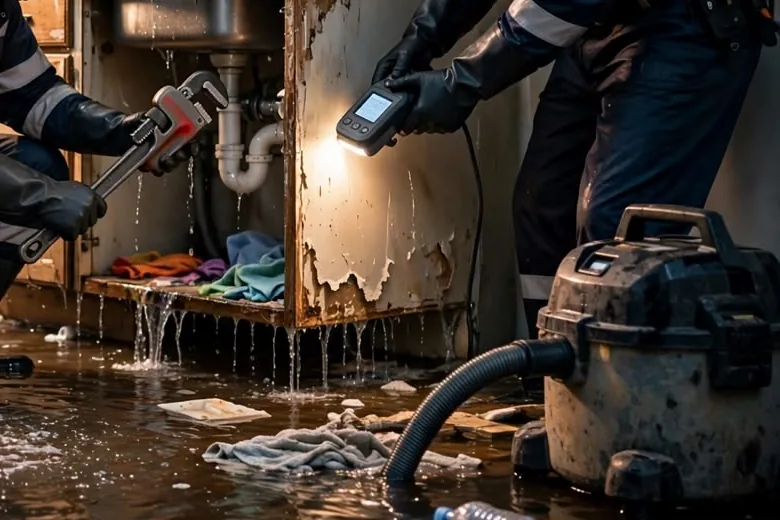
Common Causes and Signs of Water Heater Leaks
Leaking Water Heater Tanks, Valves, and Connections
Water heater leaks can develop for several reasons. Corrosion may weaken a storage tank over time, while worn fittings, loose supply connections, drain valves, or pressure-relief valves can allow water to escape. A leak may also originate from nearby plumbing rather than the tank itself.
The location of the water can provide clues, but visible moisture alone does not always identify the source. A qualified plumber can inspect the water heater and its connections to determine what needs repair. Identifying and addressing the source is important before cleanup and restoration work can be completed.
If water is collecting around a water heater in your Bradenton property, pay attention to the amount of water present and whether nearby materials show signs of damage. Do not assume the tank needs replacement until the cause has been properly assessed.
Water Damage Around Water Heaters and Utility Areas
Water heaters are commonly installed in garages, utility rooms, laundry areas, closets, and other designated spaces. When a leak occurs, water may spread across concrete, tile, hardwood, or other flooring. Depending on the layout, nearby drywall, baseboards, cabinets, and stored belongings may also become wet.
Common signs of water heater leak damage include:
- Water pooling around the base of the unit
- Wet or discolored flooring
- Damp drywall or water-stained walls
- Swollen baseboards or damaged trim
- Wet carpet or carpet padding near the installation area
- Persistent moisture beneath flooring or around adjoining walls
- Water damage to boxes, furniture, or stored items
Some damage may remain hidden after visible water has been removed. A proper assessment helps determine which areas need further attention and whether additional drying is necessary.
What to Do When Your Water Heater Starts Leaking
Protect People and Address Immediate Safety Risks
A leaking water heater can create safety concerns, particularly when hot water, gas connections, or electrical equipment are involved. Keep people away from unsafe areas and do not touch electrical equipment that may have been exposed to water.
If it is safe to do so, follow the manufacturer's instructions for shutting off the water supply. Do not attempt to dismantle the water heater, repair gas connections, or operate wet electrical components. Contact a qualified plumber to address the source of the leak, and seek appropriate emergency assistance if you suspect a gas leak or another immediate hazard.
Once the area is safe to approach, note where water has collected and which materials appear affected. These details can help guide the initial water damage assessment.
Limit Water Damage Before Cleanup Begins
After the immediate safety concerns have been addressed, there are practical steps you can take while arranging cleanup:
- Keep people away from wet or potentially hazardous areas.
- Move unaffected belongings away from the water if it is safe to do so.
- Avoid walking through standing water when electrical hazards may be present.
- Take photographs of visible damage for your records.
- Arrange plumbing repairs to stop the leak at its source.
- Seek an assessment if water has reached flooring, walls, cabinets, or other building materials.
Avoid using ordinary household equipment to remove water when electrical safety is uncertain. Water can travel beyond the area where the leak first appeared, so visible pooling should not be treated as the only sign of damage.
Our Water Heater Leak Cleanup Process
Assessing Water Damage Around the Water Heater
Water heater leak cleanup begins with understanding where the water originated, how far it spread, and which materials may have been affected. The assessment may include the utility room or garage floor, nearby walls, baseboards, cabinets, and belongings.
The inspection should also consider areas where moisture may be concealed, such as beneath flooring, around wall edges, or inside accessible building cavities. The extent of the assessment depends on the property's construction and the visible signs of water intrusion.
For property owners in Bradenton, FL, identifying the affected areas helps determine the appropriate next steps. A small amount of water on a hard surface may require a different response from a leak that has soaked carpet padding, reached drywall, or spread into adjacent rooms.
Planning Water Removal and Cleanup
The cleanup approach depends on the quantity of water, the type of surface affected, and how long the materials have remained wet. Where standing water is present, water extraction may be necessary before affected areas can be evaluated further.
The process may involve removing accessible water, checking nearby materials for moisture, identifying items that need additional attention, and determining whether structural drying is appropriate. Water removal alone does not confirm that a property is completely dry, particularly when moisture has moved beneath flooring or into porous materials.
For more information about standing water removal, visit our Water Extraction & Removal service page. If a water heater leak has affected several rooms or caused extensive indoor flooding, our Emergency Water Damage Restoration page provides additional information about responding to sudden water damage.
Addressing Hidden Moisture and Damaged Materials
Evaluating Wet Flooring, Drywall, and Nearby Structures
Water from a leaking water heater can affect different materials depending on the amount released and the route it takes through the property. Tile and concrete may show visible surface water, while hardwood flooring, carpet padding, drywall, baseboards, and wood framing may absorb moisture or conceal it within their layers.
The condition of each material matters when deciding what happens next. Some affected areas may be suitable for drying, while materials that are severely damaged or contaminated may require further evaluation and possible removal. Decisions should be based on the actual condition of the materials rather than assuming that every wet surface must be replaced.
A careful assessment can help identify damage beyond the immediate area surrounding the water heater. This is particularly important when water has spread beneath flooring, reached adjoining rooms, or affected walls and built-in cabinets.
Managing Residual Moisture and Mold Concerns
After standing water has been removed, residual moisture may remain in building materials or enclosed spaces. If damp materials are not dried appropriately, prolonged moisture can contribute to deterioration and create conditions that support mold growth.
Depending on the findings, the next steps may include moisture inspection, structural drying, dehumidification, and monitoring affected materials. The appropriate methods depend on the construction, the extent of water intrusion, and the condition of the property.
Water heater leak cleanup should therefore address more than the visible puddle. If additional drying is needed, visit our Structural Drying & Dehumidification service page to learn about managing moisture in water-affected building materials.
Water Heater Leak Cleanup Services in Bradenton, FL
Cleanup for Residential and Commercial Properties
A leaking water heater can disrupt a home, apartment, office, or other commercial property. In residential settings, water may affect a garage, laundry area, utility closet, or nearby living space. In commercial buildings, the impact depends on the location of the unit and the materials or equipment stored nearby.
Bradenton Restoration Specialist focuses on water damage cleanup needs associated with leaking water heaters, including affected floors, nearby building materials, and areas where moisture may remain after visible water is removed.
The right response depends on the source and extent of the leak. If a separate plumbing pipe has failed, our Burst Pipe Water Damage service page provides more information about water damage caused by broken or leaking pipes.
Contact Bradenton Restoration Specialist for Water Heater Leak Cleanup
If a leaking water heater has left standing water or damaged nearby materials, addressing the problem promptly can help you understand the extent of the damage and the next steps to consider.
Contact Bradenton Restoration Specialist to discuss water heater leak cleanup in Bradenton, FL. Be ready to explain where the water is collecting, when you first noticed the leak, and whether nearby flooring, walls, or belongings appear affected.
- Phone Number:
- Call Now +1 (941) 541-0203
- Email:
- contact@bradentonwaterdamagerestoration.us
- Address:
- 1806 29th St W, Bradenton, FL 34205
- Hours:
- Open 24/7 for emergency calls
Contact us to discuss the water damage affecting your property and determine the appropriate next steps for cleanup and restoration.