
Water Leak Detection in Bradenton, FL
Water leaks can develop behind walls, beneath flooring, around plumbing fixtures, or in other areas where the source is not immediately visible. Even a small leak can leave water stains, damp building materials, and recurring moisture that may lead to further property damage if the underlying issue remains unresolved.
Bradenton Restoration Specialist helps property owners understand the signs of possible water intrusion and assess affected areas. Whether you have noticed a ceiling stain, damp drywall, unexplained moisture, or water collecting near a plumbing fixture, identifying the potential source is an important first step toward addressing the problem.
Signs You May Have a Hidden Water Leak
Water Stains, Damp Walls, and Unexplained Moisture
Not every water leak produces an obvious puddle. Water may travel through building materials before becoming visible, making it difficult to determine where the problem began. You might notice discoloration on a ceiling, peeling paint, bubbling wall finishes, swollen baseboards, or flooring that appears warped or damp.
Other warning signs include persistent wet spots, moisture around cabinets, or musty odors in rooms that should remain dry. These symptoms can indicate a plumbing leak or another source of water intrusion, although condensation and other moisture problems may produce similar signs.
Pay attention to changes that return after the surface has dried. Repeated staining or dampness may suggest that water is continuing to enter the area. An inspection can help assess the affected materials and determine what should be investigated next.
Unexpected Water Usage and Other Warning Signs
An unexplained increase in water usage can sometimes point to a leak, particularly when household routines have not changed. If your water meter continues moving while all water fixtures and appliances are turned off, there may be water flowing somewhere in the system. Follow the meter manufacturer's instructions and avoid accessing equipment that may be unsafe.
You should also look for moisture around toilets, sinks, washing machine connections, and other plumbing fixtures. Dripping sounds inside a wall, recurring wet flooring, or dampness near pipe penetrations can provide additional clues.
These signs do not establish the exact location or cause of a leak on their own. A closer assessment may be needed to distinguish a plumbing issue from roof leakage, condensation, or another source of moisture.
Common Sources of Indoor Water Leaks
Leaking Pipes, Plumbing Connections, and Fixtures
Water leaks can originate from supply pipes, loose connections, worn fittings, faucets, toilets, and other plumbing components. Flexible supply hoses connected to washing machines and similar appliances can also leak, allowing water to collect on nearby floors or spread into adjacent materials.
Leaks beneath kitchen and bathroom sinks may remain unnoticed when water gathers inside cabinets or behind stored items. A damaged connection can also allow moisture to reach baseboards, wall cavities, or flooring before the problem becomes obvious.
Look for visible dripping, corrosion around accessible connections, damp cabinet surfaces, and recurring water near plumbing fixtures. Do not dismantle concealed plumbing or attempt repairs beyond your ability. A qualified plumber may be needed to confirm the source and repair the faulty component.
Water Heater Connections and Hidden Plumbing Leaks
Water heaters, refrigerator water lines, utility-room plumbing, and concealed pipes can all be potential sources of indoor water intrusion. A leak around a water heater connection may leave moisture on the surrounding floor, while a concealed pipe leak can affect walls, ceilings, or flooring some distance from the original source.
Water may travel along framing or beneath flooring, so the location of a visible stain does not always match the location of the leak. This can make it difficult to identify the source through visual observation alone.
If you suspect a leak near a water heater, avoid touching wet electrical components or attempting to disassemble the appliance. For active leaking, prioritize safety and contact an appropriate plumbing professional. If water has already affected the building materials, water damage assessment and restoration may also be necessary.
Our Water Leak Detection and Inspection Process
Inspecting Suspected Leak Areas and Visible Warning Signs
The first step is to understand what you have noticed and where the problem appears. Relevant details include when the moisture started, whether it returns after drying, whether the area is close to plumbing fixtures, and whether the problem changes when water is being used.
An inspection can focus on accessible plumbing connections, visible water stains, damp surfaces, affected flooring, and other areas showing signs of possible water intrusion. The aim is to assess the symptoms and identify reasonable next steps rather than assume that every damp spot has the same cause.
Where the source is concealed or the evidence is inconclusive, further investigation by a qualified plumber or an appropriate leak detection specialist may be necessary. The inspection method will depend on the suspected source and the conditions at the property.
Assessing Moisture and Identifying Possible Leak Sources
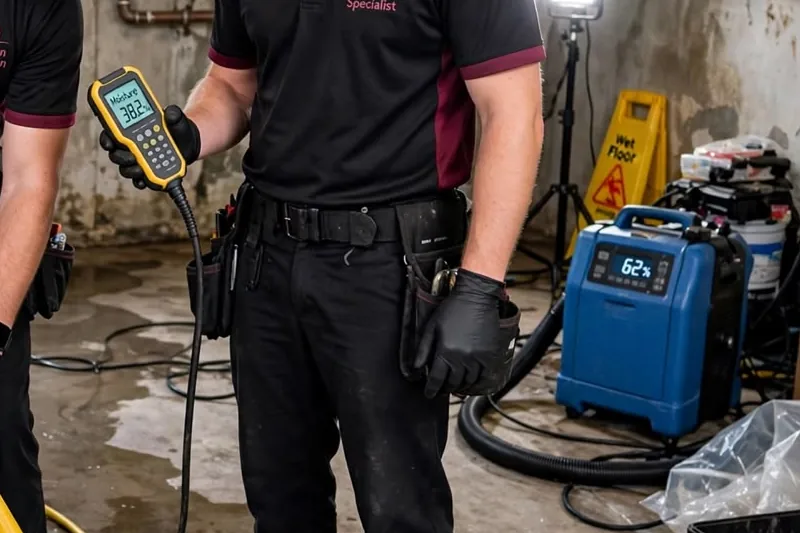
Moisture assessment can help determine whether water has affected drywall, baseboards, flooring, cabinets, or other building materials. Where appropriate equipment and expertise are available, moisture meter readings can provide additional information about damp areas and help guide further investigation.
The assessment should consider both the visible symptoms and the possibility of hidden moisture. A ceiling stain, for example, may require investigation of the area above it, while damp flooring near a sink may call for closer attention to nearby plumbing connections.
Not every leak can be located through a visual inspection or a single moisture reading. Depending on the findings, the next step may involve a plumber, a specialized leak detection provider, or a water damage restoration professional. Any recommended service should match the source of the problem and the condition of the affected materials.
Addressing Water Leaks Before Damage Spreads
Evaluating Moisture Behind Walls and Beneath Flooring
When water enters a building, it may affect more than the surface where the first sign appears. Moisture can reach drywall, insulation, wood framing, baseboards, subfloors, cabinets, and flooring layers. These materials may remain damp even after visible water has disappeared.
Persistent moisture deserves attention because prolonged dampness can contribute to material deterioration and create conditions that support mold growth. However, a stain or musty odor alone does not confirm the presence of mold or establish how much material is affected.
Assessing the surrounding area helps determine whether the problem appears limited to one surface or may extend into nearby building materials. If water damage is present, the appropriate next steps may include water removal, structural drying, or mold remediation, depending on the extent and condition of the affected area.
Planning Next Steps for Leak Repairs and Water Damage
Finding the likely source of a leak and restoring water-damaged materials are related but different tasks. Plumbing repairs address the faulty pipe, fitting, fixture, or other component allowing water to escape. Restoration work addresses the water that has entered the property and the materials affected by it.
If standing water has accumulated, professional water extraction may be appropriate. If building materials remain damp, structural drying and dehumidification may be needed. Where visible mold growth is present, the situation may require a separate assessment and appropriate remediation.
For active leaks, address the water source as safely as possible and seek qualified plumbing assistance when needed. If water is near electrical outlets, wiring, or electrical equipment, avoid the affected area and contact the appropriate professional. Taking the right next steps can help limit further damage and clarify what repairs or restoration work may be necessary.
Water Leak Detection Services in Bradenton, FL
Water Leak Inspection for Homes and Commercial Properties
Water leak concerns can affect homes, apartments, offices, retail spaces, and other buildings in Bradenton, Florida. Warning signs may appear in kitchens, bathrooms, utility rooms, ceilings, interior walls, or areas where plumbing lines connect to fixtures and appliances.
Bradenton Restoration Specialist can help you understand water-related concerns and assess visible signs of moisture damage within the scope of services offered. If the source requires specialized leak locating or plumbing repairs that are not provided, a qualified specialist may be needed to complete that part of the work.
When describing the problem, share where the moisture appears, when you first noticed it, and whether the area continues to get wet. These details can help establish the next steps for investigating the suspected leak and addressing any resulting water damage.
Contact Bradenton Restoration Specialist About a Suspected Water Leak
Noticing a water stain, damp wall, recurring wet spot, or unexplained moisture can leave you unsure about what to do next. Start by documenting the affected area and considering whether the water source may still be active. Avoid disturbing wet building materials or handling plumbing and electrical components if doing so could create a safety risk.
For assistance with your water-related concerns in Bradenton, contact Bradenton Restoration Specialist to discuss the symptoms and determine whether the issue falls within the available inspection or restoration services.
- Phone Number:
- Call Now +1 (941) 541-0203
- Email:
- contact@bradentonwaterdamagerestoration.us
- Address:
- 1806 29th St W, Bradenton, FL 34205
- Hours:
- Open 24/7 for emergency calls
Describe what you have observed and where the problem is occurring so the appropriate next steps can be discussed.